Introduction
Fall dry skin can seem to show up overnight. One week feels warm and damp. The next brings cool air, dry heat, and tight skin. This shift is common, but it is not random. Weather, indoor heat, hot showers, and daily habits all play a part. A few small changes can help skin hold more water.
What Fall Dry Skin Really Means
Dry skin has lost too much water. The outer skin layer needs water and natural oils. Together, they help form a strong skin barrier. That barrier helps keep water in and irritants out.
When the barrier loses water, skin may feel rough or tight. Fine flakes may show on arms, hands, and legs. Some areas may itch or sting. Darker skin may look gray or ashy when dry.
Dry skin is not the same for each person. Age, health, medicine, and skin type can change risk. Some skin problems can also cause dry patches. A simple fall plan may help mild dryness. Lasting or painful changes need medical care.
Watch for early signs
Do not wait for deep cracks to form. Tightness after a shower is an early clue. A rough feel is another clue. Mild itch may also point to water loss.
Check your hands, shins, elbows, and feet. These spots often show dryness first. Note when the change began. This can help you spot a link with weather or heat.
Why Cooler Air Can Dry Skin
Cool air often holds less water than warm air. Wind can add to the dry feel. Skin may lose water more fast in these days. The shift can feel sharp after a humid summer.
The American Academy of Dermatology notes that low humidity can dry skin. Cold outdoor air and dry indoor heat can work at once. Skin then faces dry air for much of the day.
Fall wind may also make bare skin feel sore. Hands and the face get the most air. Light gloves can help on cold days. A scarf can shield the neck and lower face.
A change in season needs a change in care
A light summer lotion may not feel rich enough in fall. This does not mean you need a full new shelf. You may only need a thicker cream for dry spots.
Make one change at a time. That plan makes skin reactions easier to track. It also helps you learn what your skin needs.
Indoor Heat Lowers Moisture Too
Many homes turn on heat as nights get cold. Warm indoor air may feel good. Yet the air can become very dry. Fireplaces can add to that dry feel.
A clean cool-mist humidifier may add water to room air. Follow the maker’s care guide. Change the water and clean the unit often. A dirty unit can grow mold or germs.
You do not need to make your home feel damp. The goal is a safe, mild level of moisture. Place the unit where it cannot spill. Keep cords and tanks away from small children.
Heat can shape daily habits
Cold weather can make long, hot showers feel great. Hot water can strip skin oils. Long showers give water more time to wash those oils away. The skin may feel tight soon after.
Use warm water instead of hot water. Keep the shower brief when you can. Pat skin dry with a soft towel. Do not rub it hard.
Use Gentle Wash Care
Soap removes dirt, but strong soap may remove too much oil. Scented wash can also bother dry skin. A gentle, fragrance-free wash is often a better start.
Fragrance-free and unscented do not always mean the same thing. An unscented item may use a scent to mask an odor. Check the label if scent tends to bother you.
You may not need soap on every inch of skin. Focus on areas that need a wash. Use a mild touch and rinse well. Harsh scrubs can make dry, flaky skin feel worse.
Skip hard scrubs on dry patches
Flakes can make you want to scrub more. That can hurt the skin barrier. It may also cause more sting and redness.
Use soft hands or a soft cloth. Stop if the skin burns or feels raw. Moisture is often more useful than more scrub.
Moisturize While Skin Is Damp
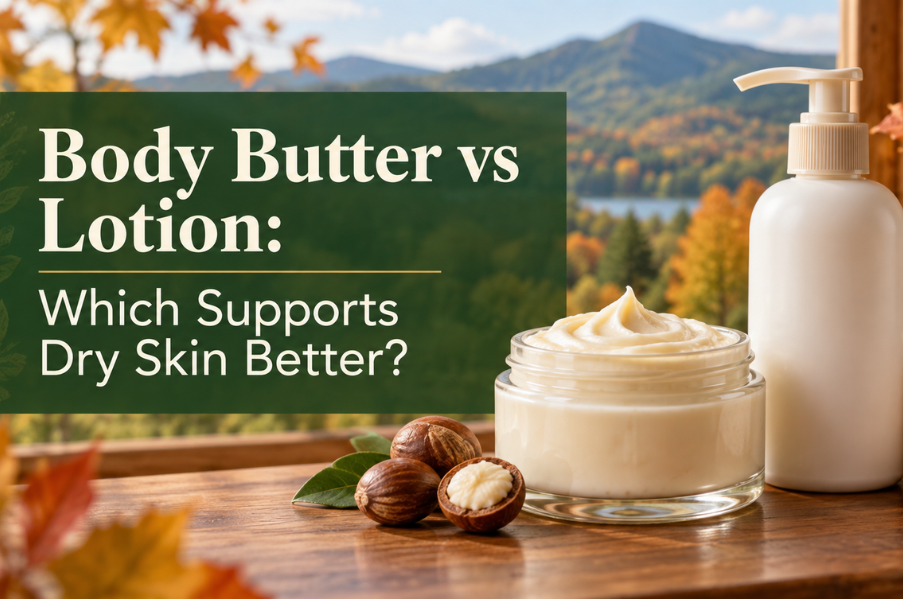
The best time to use a cream is just after a wash. Pat the skin, but leave it a bit damp. Then add the cream or body butter. This helps trap some water on the skin.
The AAD says creams and ointments often hold more water than lotions. A thick item can help very dry spots. A light lotion may still suit skin that feels only a bit dry.
Use enough to cover the area with a thin, even coat. Add more after hand washing. Reapply when skin feels tight. The best plan is one you can keep each day.
Green Mountain Hemp Company offers a CBD body butter range. The richer form may suit dry body areas when lotion feels too light. Read the full label before use. CBD does not make a skin cream a cure or a drug.
Patch test a new item
Try a small amount on one spot first. Wait and watch for a rash, sting, or itch. Stop use if the spot gets sore.
This step matters with scent, plant oils, and new blends. Natural does not always mean gentle. Skin can react to many kinds of parts.
Choose a Cream by Its Full Label
A front label may use words like rich or pure. Those words do not show how skin will react. Read the full list on the back.
The AAD lists parts such as glycerin, mineral oil, petrolatum, and shea butter. These parts can help dry skin in different ways. Some draw in water. Some help slow water loss.
If skin is sore or easy to upset, start with a plain item. Fragrance-free care may be less harsh. Avoid a strong scent on cracked skin.
When you compare hemp items, read the full product label. Check the parts list, use guide, and batch facts. Clear facts matter more than bold claims.
Check the right area of use
A body butter is made for body skin. It may feel too thick for the face. Thick oils can also clog pores for some people.
Keep care away from eyes and open cuts unless the label says otherwise. Wash your hands after use when needed. Store the jar as the label says.
Build a Simple Fall Skin Plan
A good plan does not need many steps. Start with a short warm shower. Pat the skin until it is still a bit damp. Add a cream or body butter at once.
Use hand cream after each hand wash. Place one tube near the sink. Keep one in a bag if your hands dry out at work.
Wear soft cloth next to the skin. Wool can feel rough on dry spots. A cotton layer can help keep rough cloth off the skin.
Use gloves for cold air, dishes, and wet work. Water and soap can dry hands fast. Gloves add a simple shield.
Keep a one-week skin note
Write down the wash, cream, and sore spots. Keep the note short. A few words each day are enough.
Do not add three new items at once. If a rash starts, you may not know the cause. One change gives you a clear test.
Where CBD Body Care May Fit
CBD body care may be one part of a skin plan. The base cream, oils, and other parts still matter. A well-made butter can coat dry body skin. Yet CBD is not proven to heal every dry skin problem.
Do not use a body care item to treat a health issue. Retail CBD skin items are not approved drugs. Claims about pain, rash, or disease need sound proof.
Check the batch report when one is offered. Green Mountain Hemp Company keeps an Analysis and COA library. Match the item name and batch when you can.
You can also view all CBD products to compare forms. Pick a form that fits its planned use. A body item should stay on the skin unless its label states more.
Use care with plant parts
Plant oils and scent can cause a skin reaction. This can happen even when an item is called natural. Patch test first if your skin is easy to upset.
Ask a skin doctor about use on eczema or a rash. Do not place a new item on broken or weeping skin. Stop if pain, swelling, or hives start.
Keep Sun Care in the Fall
Cool air does not stop sun rays. Bare skin still needs sun care. The AAD advises broad-spectrum, water-resistant SPF 30 or more.
Use shade and cloth as well. Cover hands and the face when it fits the day. Reapply sun care as its label directs.
Some sun creams can feel dry or sting. A cream form may suit dry skin better than a spray. Test a small spot if your skin is sore.
Do not let clouds fool you
Clouds can cut some light, but they do not block all rays. Fall walks, yard work, and sports still add sun time. Keep sun care with your day plan.
Know When to Seek Help
Home care may help mild fall dry skin. Get help when the skin keeps getting worse. Deep cracks, blood, pain, or a wide rash need care.
See a skin doctor if home steps do not help. You may have eczema, psoriasis, an allergy, or an infection. A doctor can find the cause and guide care.
Get prompt help for swelling, hives, or trouble breathing. Stop the new item at once. Bring the label or jar to the visit.
Fall can change how skin feels, but the plan can stay simple. Use warm water, mild wash, and a rich cream. Add it while skin is damp. Shield skin from cold air and rough cloth. Small steps can help skin feel more at ease through the season.