Introduction
Body butter vs lotion is a common choice when skin feels dry. Both items add water, but they do not feel the same. One spreads fast and feels light. The other feels richer and stays on skin longer. Your best option depends on dryness, body area, weather, and taste. This guide explains those differences without turning skin care into a hard plan.
Body Butter vs Lotion at a Glance
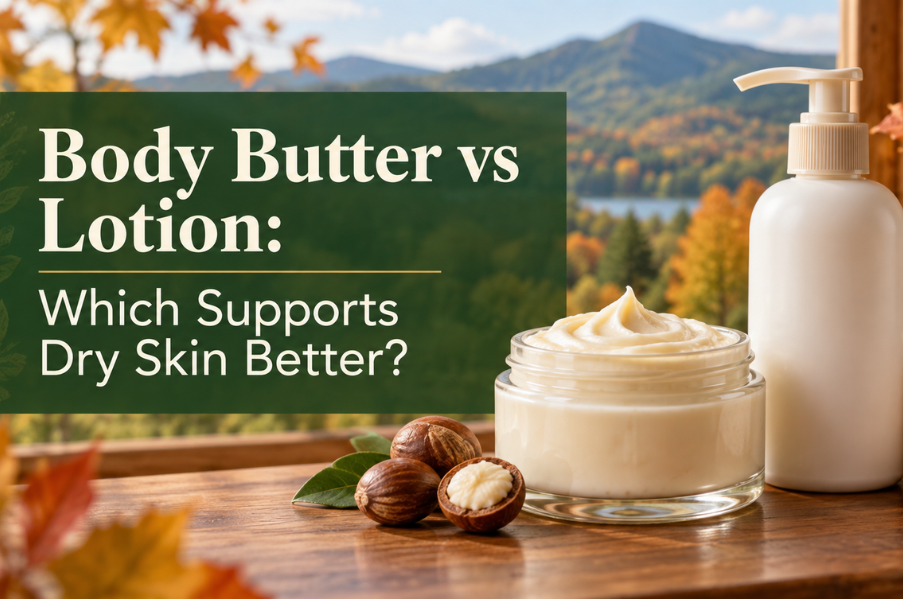
Lotion often blends water with oils and other parts. Its higher water content creates a lighter feel. Most lotions spread quickly across large areas. They also tend to absorb faster and leave less residue.
Body butter is often thicker and has more oils or butters. Common examples include shea butter, cocoa butter, and coconut-derived oils. These parts create a richer layer on the skin. That layer may help slow water loss after bathing.
Neither format is always best for everyone. Lotion can work well for mild dryness. A richer butter may suit rough areas or colder months. The right choice should feel good enough for daily use.
Think about feel, not sales words
An item name also cannot predict every response. A patch test gives more useful facts. Apply a small amount to one area first. Stop if redness, burning, swelling, or itching begins.
Why Dry Skin Needs More Than Water
Dry skin has lost too much water. Its outer layer also depends on natural oils. Together, water and oils support the skin barrier. This barrier helps keep water in and outside harsh things out.
Cool air and indoor heat can increase dryness. Hot showers and strong cleansers may also remove skin oils. Skin can then feel tight, rough, flaky, or itchy.
Creams work in several ways. Some parts attract water. Others smooth rough spaces between skin cells. Richer oils and butters can help reduce water loss. A balanced blend may use more than one approach.
The American Academy of Dermatology says creams and ointments often hold water better than lotions. Still, a lotion may be enough for mild fall dryness. Comfort and steady use still matter.
Timing can improve either choice
Apply cream soon after washing. Pat skin gently and leave it slightly damp. Then spread the lotion or butter over that water. This simple timing helps trap water before it dries.
Reapply after hand washing or when skin feels tight. Daily use matters more than an occasional heavy layer. Keep an item near the sink if hands dry quickly.
When Lotion May Be the Better Fit
Lotion works well when you want quick, light care. It spreads easily across arms and legs. Many people prefer it during warm or humid weather. It can also feel easier before dressing.
Normal skin with mild dryness may not need a heavy coating. A lotion can add water without feeling greasy. It may also suit daytime use when hands must grip tools or keyboards.
Choose a simple lotion when skin is easily sore. Scent-free options may reduce avoidable contact. Check the full label because unscented items may still contain masking scent.
Lotion is not weak by name. Blends vary widely. Parts and use habits matter as much as the format name. A well-made lotion used often may outperform a richer item used rarely.
Where lotion often feels good
Large body areas are easier to cover with lotion. It can work well on arms, legs, and the torso. A pump bottle also makes daily use simple.
When Body Butter May Be the Better Fit
Body butter may suit skin that feels very dry or rough. Its thicker feel can create a rich coat. This can feel useful during cold, windy, or dry weather.
Elbows, knees, heels, hands, and shins often need richer care. Apply a thin layer first. Add more only where needed. Too much may feel slick without adding value.
A butter can also fit an evening plan. The longer wear time is less distracting during rest. Soft cotton clothes can shield bedding while the item settles.
Green Mountain Hemp Company offers a CBD body butter range. The category includes richer body-care options for times when lotion feels too light. Review each item page before choosing a size or scent.
Know what the base blend gives
The company’s SILK blend lists hemp oil, shea butter, cocoa butter, and MCT coconut oil. These parts create its feel and skin feel. The SILK CBD Relief Body Butter page gives current item details.
CBD does not turn a cream into an approved skin treatment. Research on retail topical CBD items is still limited. Choose body care for its full blend, label clarity, and right skin care use.
Match the Item to the Body Area
Body skin and facial skin do not always need the same item. A thick butter may feel good on elbows yet too heavy on the face. Acne-prone areas may react differently from dry legs.
Start with the area named on the label. Keep items away from eyes and open wounds. Do not place body butter on broken or weeping skin unless a doctor advises it.
Hands face much washing, cold air, and cleaning fluids. A rich blend may feel good at night. A light lotion is easy to reuse at work.
Feet can become very dry, near the heels. Apply cream after a bath. Then wear clean cotton socks. Avoid putting a slick item between toes. Keep floors safe after use.
Use both textures in one plan
You do not need one blend for every area. Lotion can cover most of the body. Butter can focus on rough spots. This approach keeps the plan simple and flexible.
Your needs may also change with the season. A summer lotion can remain useful on warm days. Add a richer item only when cooler air creates more dryness.
Read the Label Before Choosing
The front label gives a quick view. The part list shows more. Look for the item’s base, scent, plant oils, and other added parts.
Skin that reacts fast may need a plain blend. Scent can bother some people. Plant oils can also cause rashes. Natural does not mean safe for all skin.
Check the use steps and storage notes. Heat can change the feel of some body butters. Close the container after use. Use clean hands or a clean scoop as needed.
For hemp body care, look for batch facts and test access. Green Mountain Hemp Company keeps an Analysis and COA library. Match the item and batch when records are on hand.
Avoid medical promises
A cream can support a good skin-care plan. It should not promise to diagnose, cure, or treat disease. Retail CBD skin items are not approved drugs.
The FDA says many questions remain about CBD safety and results. Claims should stay modest and proof-led. Ask a doctor before using CBD alongside medical care.
Build a Simple Dry-Skin Plan
Keep showers short and use warm water. Hot water may remove more skin oil. Choose a gentle cleanser and avoid hard scrubbing on flaky skin.
Pat dry instead of rubbing. Apply lotion or butter while skin remains damp. Use lotion for quick care. Add body butter to areas that still feel rough.
Wear soft fabrics next to easy-to-upset skin. Gloves can protect hands from cold air and wet work. A clean cool-mist humidifier may help when indoor air becomes very dry.
Track one change at a time. This makes rashes easier to find. It also shows whether the new item fits your plan.
An easy morning and evening plan
In the morning, use lotion where you need light care. Add sunscreen to exposed skin as directed. Cool weather does not remove sun contact.
At night, check hands, elbows, knees, and heels. Apply body butter only where extra richness feels useful. A small amount often spreads farther than expected.
How to Choose Between Body Butter and Lotion
Begin with your current level of dryness. Mild tightness may respond to lotion. Rough, flaky areas may feel better with a richer cream or butter. Severe signs need advice from a doctor.
Next, think of the time of day. Lotion often fits busy mornings. Butter may suit evenings or focused spots. The feel matters. You must want to use the item. This matters because you must want to use the item.
Then review the label. Confirm parts, scent, steps, and right body area. Patch test any new blend. Check hemp item test when it is on hand.
Finally, judge results over several days. Skin should feel better, not more sore. Stop using any item that causes a new rash.
When Dry Skin Needs Doctor Care
Try a One-Week Skin Check
Give the new plan one week when skin is calm. Use the same wash and the same cream. Note how skin feels in the morning. Check it again at night. Look for less tightness, less flake, and no new rash.
Keep the test simple. Do not add a new soap at the same time. Do not scrub dry spots. This makes the result much easier to judge.
If lotion works all day, there may be no need for more. If rough spots stay dry, add butter there. Use a thin coat first. The goal is soft, calm skin, not a thick or slick layer.
Home care may help mild dryness. Contact a skin doctor when signs persist or worsen. Deep cracks, bleeding, pain, swelling, or a large rash deserve attention.
Dryness can sometimes show eczema, psoriasis, allergy, skin germ, or another health issue. A doctor can find the cause. This stops a skin care plan from delaying proper care.
Seek prompt help for hives, facial swelling, or trouble breathing. Stop the new item and bring its label to the visit.
Body butter vs lotion does not need one clear winner. Lotion offers light, easy water. Body butter gives richer care for very dry areas. Match the feel to your skin, season, and daily habits. Apply it while skin is damp. Read the label. Use it each day. A simple plan is often the easiest plan to maintain.