CBD and Mental Health, Written by Callum Hedman
Date Published: March 12, 2026
Introduction
As the long months of winter end, we want you to remain mindful of your mental health. Whether you’re managing everyday stress or long-term struggles, finding the right tools to support your mental well-being can make a big difference.
Many people find that cannabis may assist with anxiety, depression, and sleep difficulties, particularly in individuals experiencing PTSD-related symptoms. Some research has also explored potential cognitive benefits in individuals with certain neurological or psychiatric conditions. However, the effects of cannabis can vary depending on the person, the amount used, and the way it is consumed. Today, we are focusing specifically on one compound—cannabidiol (CBD)—and exploring how it may support mental health. [1]
Research and Facts
Understanding what supports your mental health is a personal journey. What works for one individual may not work for another.
Around the world, people use tetrahydrocannabinol (THC) and cannabidiol (CBD) in attempts to manage symptoms related to anxiety, depression, and other mental health conditions. Many individuals prefer CBD because THC may trigger anxiety or paranoia at higher doses in some users. [1]
The World Health Organization states that:
“In its pure state, cannabidiol does not appear to have abuse potential or cause harm.” [2]
Additionally, a study published in Neuropsychopharmacology reported that:
“Acute CBD alone is unlikely to significantly impair daily functioning or workplace performance.” [3]
CBD interacts with the body’s endocannabinoid system (ECS), a biological system present in all vertebrates that plays a role in regulating several essential processes, including:
Sleep
CBD helps improve sleep primarily by reducing underlying causes of sleeplessness, such as anxiety, stress, and chronic pain, rather than acting as a direct sedative.
Memory
CBD may help improve memory primarily by reducing neuroinflammation, lowering anxiety, and increasing blood flow to the hippocampus, which is the region of the brain that is critical for memory processing
Appetite
CBD can help normalize appetite by reducing stress, anxiety, and nausea, or by acting as a CB1 receptor antagonist to potentially suppress appetite and manage overeating.
Mood
CBD acts on brain areas linked to anxiety, such as the amygdala, reducing stress responses, lowering cortisol levels, and alleviating symptoms of anxiety and depression
Pain Perception
CBD can help by reducing inflammation and modulating neurotransmitter activity. It acts on CB1 and CB2 receptors, inhibits anandamide reuptake (a molecule that reduces pain), and interacts with TRPV1 channels to desensitize pain signaling, offering potential relief for chronic pain conditions like arthritis and neuropathy.
Stress Response
CBD helps regulate the stress response by interacting with the body's endocannabinoid system (ECS), serotonin receptors, and the HPA axis to lower cortisol levels and promote calm. It acts as an anxiolytic, modulating brain regions involved in anxiety—like the amygdala—to reduce fear and improve stress resilience.
Immune Function
CBD regulates the immune system by acting as an immunomodulator, helping to balance immune responses rather than simply boosting or suppressing them. It primarily reduces chronic inflammation by inhibiting proinflammatory cytokines and promoting regulatory cells.
Researchers believe the ECS helps maintain internal balance (homeostasis) in the body. By interacting with this system, CBD may help promote a sense of calm and support emotional regulation. [4]
Unlike THC, CBD does not produce an intoxicating “high.” Because of this, many people feel more comfortable incorporating CBD into daily routines. Some users report feeling calmer, more focused, and more balanced after using CBD products. While research is still developing, early findings and personal reports suggest CBD may offer supportive benefits for individuals navigating anxiety, depression, and stress-related conditions. [1]
CBD and Mental Health Study Results
A case series published in The Permanente Journal examined CBD use in individuals experiencing anxiety and sleep concerns.
Key findings included:
- 79% of participants experienced reduced anxiety symptoms
- 66% reported improved sleep quality within the first month [5]
In this study, most participants were given 25 mg of CBD per day in capsule form. Researchers reported that CBD was generally well-tolerated with minimal side effects. These findings suggest CBD may offer a potentially supportive alternative or complement to other approaches used to manage anxiety or sleep concerns. However, more controlled clinical research is still needed to fully understand its effectiveness and long-term impacts. [5]
Practical Use and Precautions
If you are considering adding CBD to your wellness routine, it is important to think about how and when you use it.
CBD is available in several forms, including:
BALANCE Hemp Extract CBD Tincture (CBD Oil)
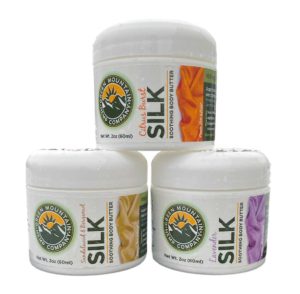
Silk CBD Pain Relief Body Butter
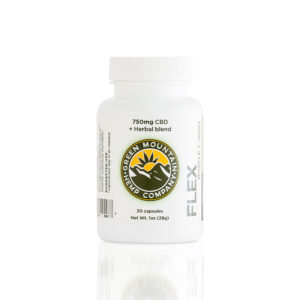
FLEX™ 750mg Muscle & Joint Capsules
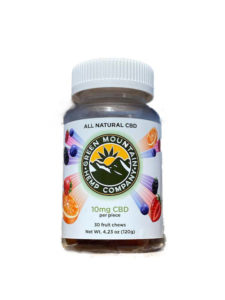
CBD Fruit Chews
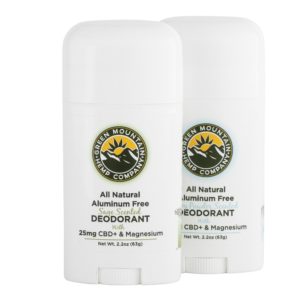
Seventh Day Aluminum Free Deodorant
CBD Roll On – Fast-Acting Relief | Green Mountain Hemp Company
Each method of consumption has different absorption rates and effects. For mental health support, many people start with a low daily dose of CBD oil or gummies and increase gradually if needed. Consistency is often recommended, as effects may build over time.
While many individuals report positive experiences with CBD, it is important to approach it carefully. Product quality, dosage, and ingredients can vary widely between brands, and individual responses may differ.
If negative side effects occur, discontinue use and consult a healthcare professional. Everyone’s wellness journey is different, and CBD may simply be one potential option among many when exploring approaches to mental health support.
Supporting mental health is not a one-size-fits-all approach—it’s an ongoing process of discovering what works best for your individual needs and lifestyle. While CBD is not a cure or replacement for professional care, many people choose to incorporate it as part of a broader wellness routine aimed at managing stress, improving sleep, and promoting a greater sense of balance.
References
[1] Grinspoon, Peter. “Cannabidiol (CBD): What We Know and What We Don’t.” Harvard Health, 24 Aug. 2018.
[2] World Health Organization. Cannabidiol (Compound of Cannabis) https://www.who.int/news-room/questions-and-answers/item/cannabidiol-(compound-of-cannabis)
[3] Lo, Lindsay A., et al. “Does Acute Cannabidiol (CBD) Use Impair Performance?” Neuropsychopharmacology, 25 Mar. 2024.
https://www.nature.com/articles/s41386-024-01847-w
[4] Grinspoon, Peter. “The Endocannabinoid System: Essential and Mysterious.” Harvard Health, 11 Aug. 2021.
https://www.health.harvard.edu/blog/the-endocannabinoid-system-essential-and-mysterious-202108112569
[5] Shannon, Scott, et al. “Cannabidiol in Anxiety and Sleep: A Large Case Series.” The Permanente Journal, vol. 23, no. 1, 2019. https://doi.org/10.7812/tpp/18-041
Background sources
Mamelak, Mortimer. Nightmares and the Cannabinoids. Current Neuropharmacology, 2020.
Check out our other blogs, and try to remember to leave a review if you buy one of our products! It can really help local shops out! And remember – Live the Way Nature Intended.