The Best CBD Type Is the One That Fits Your Life
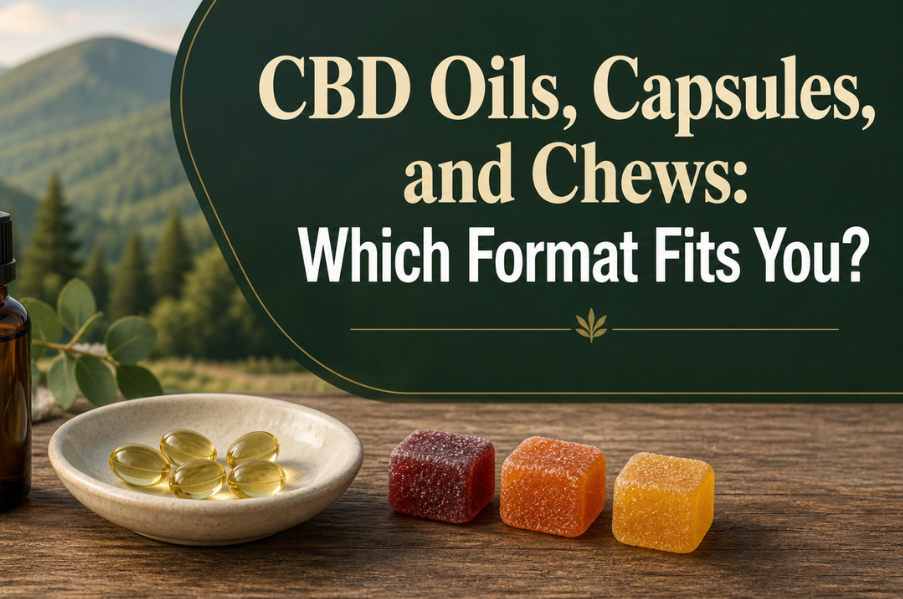
CBD shopping can feel harder than it should. Comparing CBD oils vs capsules vs chews is the fastest way to narrow the choice. Oils, pills, and chews all place CBD into a routine. Yet each type asks something new from you. One needs a dropper. One needs water. One tastes like a treat.
When you weigh CBD oils vs capsules vs chews, no type is best for each person. Ask a plain question: Which one can you use with care each day? Your answer may depend on taste, travel, label math, added items, and how much control you want.
Green Mountain Hemp Company offers several choices in its complete CBD collection. This guide looks at three types used by mouth. It does not rank them by health result. Research on store-bought CBD is still slim, and each person can feel a new effect.
CBD Oils vs Capsules vs Chews: A Quick Side-by-Side View
CBD oil gives you the most control when you measure it. Pills give a set amount in a well-known form. Chews also give a set amount, plus taste. Those small points shape the whole use.
Think about what usually breaks a new habit. Do you forget steps? Do you dislike swallowing pills? Does sweet flavor bother you? Do you want to adjust a measured amount within label directions? A good format removes friction instead of adding it.
Also think about where the product will live and when you will use it at home, at work, and during travel. A stable place and a clear daily cue can prevent missed or repeated servings with less stress.
Pack price tells only part of the story. Check CBD in each serving, servings per pack, all added items, and stock. Then read the matching lab report. This gives you a fairer view than pack price alone.
CBD Oil: Flexible and Easy to Measure
The BALANCE Hemp Extract CBD Tincture comes in several bottle strengths. Its listed ingredients are high-CBD hemp oil and coconut-derived MCT oil. A marked dropper lets you measure the amount shown on the label.
That control can help when you want a careful plan. It also leaves more room for math errors. Total CBD in a bottle is not CBD in one dropper. Check the bottle size, serving size, and CBD per serving before use.
Oil may suit people who do not want pills or sweet chews. It may be less convenient in a bag. A dropper can leak, and measuring takes attention. Taste and texture also matter, even when an oil is mild.
Questions to Ask Before Choosing an Oil
Can you read the dropper marks with ease? Will you use the same measure each time? Does the carrier oil fit your dietary needs? Can you store the bottle upright and away from heat? If any answer is no, another format may feel simpler.
Do not think that holding oil under your tongue will set its speed or effect. Each mix and each person can differ. The FDA says key facts are still not known about how each use method affects intake. Treat firm timing claims with care.
CBD Capsules: Fixed, Familiar, and Low-Fuss
The CBD capsules collection gives you a set amount with no dropper or sweet taste. Pills are easy to count. They also travel well when kept in the pack with the full label.
A set amount can cut down on math mistakes. It can also give you less control. You cannot split most softgels well. If the label amount does not fit your plan, do not guess. Ask the firm or your care team for help.
Added items vary across the pill line. Some goods add herbs or other hemp parts. Gelatin, coconut oil, soy, or sunflower may also be used. Read each label, even when two jars look much the same. Added items may affect food needs and drug risks.
When Capsules May Feel Like the Better Fit
Pills may work well if you want a set amount and no taste. They can fit by a daily habit, such as breakfast. They may not fit if pills are hard to take or you want small changes.
Keep the plan simple at first. Use of many CBD goods can make the total hard to track. The FDA still has key questions about CBD use over time. Write down each CBD item and the amount on its label.
CBD Chews: Pre-Portioned, Flavored, and Easy to Carry
Green Mountain Hemp Company’s CBD Fruit Chews list 10 mg of hemp-based CBD in each chew. The page names organic tapioca syrup, cane sugar, and fruit and plant juice. Check the product page for current stock and flavor options before you plan around them.
Chews may appeal to people who dislike oil or pills. The set amount is easy to understand. Flavor can make the routine pleasant. Still, a chew is not ordinary candy. Keep it in its original package and far from children, guests, and pets.
Sugar, taste, and feel need the same care as CBD. Check each added item for food needs. Do not take more since the taste is nice. Follow the label, and note how many chews you use.
A Note About THC and Drug Testing
The fruit chew page describes THC as non-detect below the stated test limit. Non-detect does not mean an absolute zero. Tests have limits, batches can differ, and workplace drug tests vary. No retail hemp product can promise that every person will pass every test.
If testing matters for work, sports, or care, weigh that risk before use. Read the current batch report. You may also choose to avoid CBD. A clear decision matters more than a bold marketing promise.
Use the Label and COA to Compare Fairly
Put the three labels side by side when you compare CBD oils vs capsules vs chews. Find the total CBD, serving size, CBD per serving, other cannabinoids, and added ingredients. Then note storage directions and warnings. This short check prevents most format confusion.
Next, visit the company’s Analysis and COA library. Match the product name, strength, and batch when possible. A report for a 1200 mg oil does not verify a different strength or a capsule. Lab results apply to the tested sample.
A good COA may show CBD, THC, other hemp parts, and test limits. Some reports may also test for unwanted items. Check the date, lab name, sample facts, and units. Ask if the report is old, lacks key facts, or is hard to match.
Save the report with your purchase details when practical. If the product changes later, you will know which results went with the bottle or package you used.
Simple Label Math
Use the amount per labeled serving for comparisons. Do not divide by guesswork. If a bottle lists 600 mg total and 30 labeled servings, the average is 20 mg per serving. Use that math only when the serving count is clear.
Compare like with like. One capsule may not equal one dropper or one chew. Also check whether a capsule contains CBD, CBN, herbs, or a blend. The front label rarely tells the whole story.
Safety Matters More Than Format
CBD can cause bad effects. The FDA lists sleepiness, an upset gut, less hunger, and mood shifts. CBD may also harm the liver or change how some drugs work. Some risks may not be clear without health care.
Talk with your care team before use, more so if you take drugs or have a health issue. Avoid CBD while pregnant or nursing. Do not mix it with beer, wine, or drugs that make you sleepy without care advice. Do not drive until you know how you feel.
Bring the full label or product link to that talk. Exact added items and amounts give your care team more facts than the word CBD alone.
Stop use and seek help if you feel a bad effect. Never use CBD to put off care. The FDA has approved one CBD drug for some rare seizure types. Store-bought oils, pills, and chews are not approved to treat an illness.
A Five-Question Check for CBD Oils vs Capsules vs Chews
Before you buy, ask five short questions. Can I use this format correctly? Do the ingredients fit me? Is the labeled amount clear? Can I find a matching COA? Can I store it safely? A no answer points to more research.
Choose oil when dose control matters most. Choose pills when a set, no-taste plan feels best. Choose chews when taste and set pieces help, but check stock and safe storage. These are use choices, not health advice.
Start with one product, follow its label, and keep a brief note. Record the time, labeled amount, and any unwanted effect. Change only one part of the routine at a time. That makes your experience easier to review.
Choose the Format You Can Use With Care
The right choice among CBD oils vs capsules vs chews should feel clear, not bold. Oil brings dose control. Pills cut down steps. Chews add taste and a set piece. Each type also has limits that need care.
Read the full label, check the right lab report, and weigh each added item. Put safety first and talk with your care team when needed. If no choice fits your needs, it is fine to skip CBD.
A calm choice built on facts is the best place to start. Keep your plan simple, keep your hopes in check, and keep asking good questions. That is a sound way to Live the Way Nature Intended.
Reference
- U.S. Food and Drug Administration. What You Need to Know About Products Containing Cannabis or Cannabis-Derived Compounds, Including CBD.
- National Center for Complementary and Integrative Health. Cannabis (Marijuana) and Cannabinoids: What You Need to Know.
- U.S. Food and Drug Administration. What You Should Know About Using Cannabis, Including CBD, When Pregnant or Breastfeeding.
- U.S. Food and Drug Administration. Some Medicines and Driving Don’t Mix.
- Federal Trade Commission. Health Products Compliance Guidance.