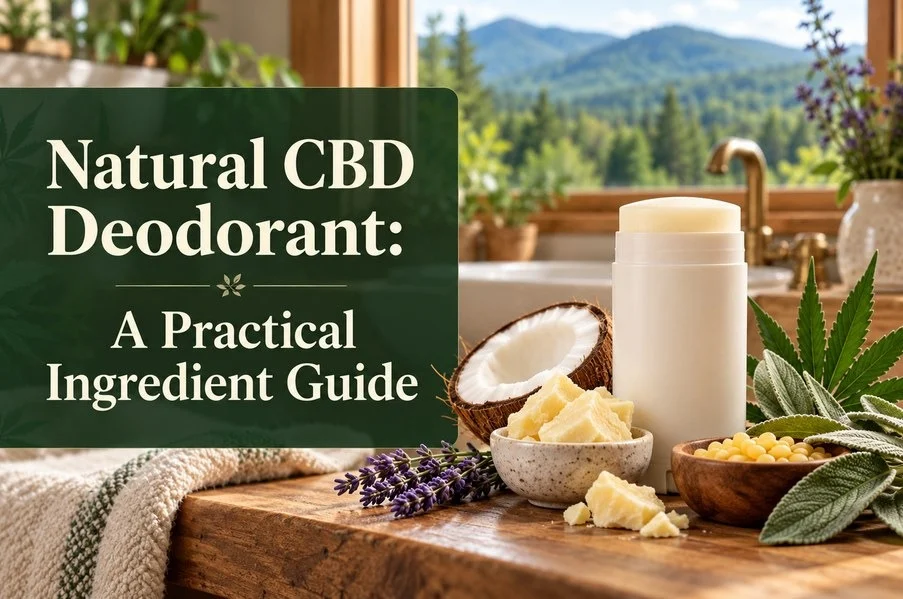
Introduction
Natural CBD deodorant can seem simple until you read its label. A single stick may contain powders, plant butters, oils, wax, hemp extract, and scent. Each part has a different job. Understanding those roles helps you compare products without relying on broad words like natural or clean. It also helps you choose a scent and texture that fit your skin.
Start With the Product’s Main Job
Deodorant helps manage body odor. It does not automatically reduce sweat. Sweat itself has little smell when it first reaches skin. Odor develops when sweat meets bacteria in warm areas, including the underarms.
Antiperspirant has a different purpose. It uses approved active ingredients, usually aluminum salts, to reduce sweating. The U.S. Food and Drug Administration regulates antiperspirants as over-the-counter drugs. Deodorants that only address odor are generally cosmetics.
This distinction sets fair expectations. An aluminum-free stick can support freshness while allowing normal sweat. Dampness does not mean the deodorant failed. Heat, activity, stress, clothing, and personal biology can all change daily results.
The CBD deodorant collection includes individual sticks and bundle options. Check the current label before ordering. Product names, scents, and ingredient lists may change over time.
How to Read a Natural CBD Deodorant Label
Begin with the complete ingredient declaration. FDA labeling rules generally require cosmetic ingredients in descending order of predominance. Ingredients at one percent or less may appear in another order. Color additives also follow separate placement rules.
That means the first ingredients usually form most of the product. They often create the stick’s structure, glide, and odor-control base. Ingredients near the end may include scent oils or other additions. Position alone does not reveal quality, safety, or performance.
Read the directions and warnings too. A clear label should explain use. Marketing words should never replace practical information.
The word natural has no single meaning that guarantees skin compatibility. Plant-based ingredients can still cause irritation or allergy. Synthetic ingredients are not automatically harsh. Judge the full formula, your known sensitivities, and your experience.
Compare the label with the live product page
Online details are useful before purchase. However, the package should guide use. Contact the company if its list differs from the product page.
Green Mountain Hemp Company lists each scent separately on the Seventh Day Aluminum Free Deodorant page. Shared ingredients form the base. The scent ingredients change by option.
Natural CBD Deodorant Ingredients and Their Roles
An ingredient list makes more sense when you group similar parts. One ingredient may support several qualities. The complete formula also matters more than any single featured ingredient.
Magnesium hydroxide supports odor control
Magnesium hydroxide appears first in the listed Seventh Day formulas. Deodorant makers commonly use it within odor-control systems. It can help create conditions that are less favorable for odor development.
It is not an antiperspirant active ingredient. Therefore, shoppers should not expect it to stop normal sweating. Its presence also does not prove that the product supplies dietary magnesium. A cosmetic label describes topical use, not nutritional treatment.
More magnesium hydroxide does not guarantee better performance. Formula balance and daily activity also matter.
Cocoa butter and shea butter shape texture
Cocoa butter and shea butter help create a smooth, solid stick. They can also give the formula a rich feel. Their firmness helps the product stay together while oils improve spread.
Plant butters may soften in a warm room or hot vehicle. Follow the storage directions on the package. A softened stick can apply too heavily, which may feel greasy or mark clothing.
These butters are not automatically suitable for every person. Anyone with a known ingredient allergy should avoid that ingredient. Stop using a product if the area becomes persistently red, itchy, swollen, or sore.
Coconut-derived oils help the stick glide
The formulas list coconut oils, including MCT oil or fractionated coconut oil. These lightweight oils can help distribute other ingredients. They also influence glide and how the stick feels after application.
Oil-rich formulas usually need only a thin layer. Heavy application may leave residue without improving odor care. Begin with the labeled amount, then judge results across normal days.
Vermont beeswax provides structure
Beeswax helps hold oils and butters in a stable stick. It can add firmness and create a light layer on skin. Its exact feel depends on the amount and surrounding ingredients.
Beeswax also means the product is not vegan. Shoppers following a vegan routine should check the label rather than assuming every natural deodorant is plant-only.
Hemp oil is part of the topical formula
The Seventh Day label lists high-CBD hemp oil or phytocannabinoid-rich hemp oil. This ingredient places hemp extract within the cosmetic base. It does not change the product’s main role as deodorant.
Do not treat topical CBD as a proven cure for pain, inflammation, anxiety, or a skin condition. Retail CBD research remains limited, and a deodorant is not a medical treatment. The most useful questions concern the product’s label, testing, directions, texture, and skin compatibility.
Green Mountain Hemp Company provides an Analysis and COAs library for listed products. A certificate can report measured cannabinoids and other tested items. It cannot predict whether a scent will suit you or whether your skin will react.
Essential oils and scented oils create each option
Sage, lavender, sandalwood, bergamot, vanilla, and baby-powder scents appear among the listed choices. Their aroma changes the experience, but fragrance can also bother sensitive skin.
The American Academy of Dermatology notes that even botanical ingredients may trigger reactions. Unscented also does not always mean fragrance-free. People with fragrance sensitivity should read the exact declaration carefully.
Choose scent based on preference and skin history. A pleasant aroma is not evidence of stronger odor control. It also does not make one formula healthier than another.
Patch Test Before Full Use
A patch test can help when your skin is reactive. The American Academy of Dermatology suggests testing a product on a small area. Follow its detailed instructions or your dermatologist’s advice.
Do not test on broken or freshly irritated skin. Underarm shaving can create tiny cuts and temporary sensitivity. Wait until skin feels calm, unless the product directions say otherwise.
Use one new underarm product at a time. Adding a new soap, scrub, and deodorant together makes reactions harder to trace. A simple routine gives you clearer information.
If burning, swelling, rash, or lasting redness appears, stop using the product. Gently wash the area. Seek medical advice for a strong reaction or symptoms that continue.
Apply the Product With Realistic Expectations
Clean, dry skin gives deodorant a consistent starting point. Apply a thin, even layer according to directions. Let it settle before dressing, especially when wearing dark fabric.
Weather and activity matter. A desk day differs from yard work. A cool morning differs from a humid afternoon. Reapplication needs may change, but more product is not always better.
Store the stick away from high heat. Close it after use. Do not share it, since direct skin contact can transfer material to the surface.
Natural deodorant should not replace normal washing or clean clothes. After exercise, change damp clothing when practical. Wash and dry the area before reapplying.
Choose Between a Single Stick and a Bundle
A single stick makes sense when you already know your preferred scent. It also limits the number of formulas introduced at once. This can be helpful for sensitive skin.
The CBD Deodorant All Scents Bundle offers several scent options together. A variety pack may suit a household or someone comparing aromas. Still, review every scent list because the added oils differ.
Deodorant also appears in the CBD Life Bundle. That set includes several product formats. A larger bundle only adds value when those products fit your routine. More items do not automatically create better wellness.
Questions to Ask Before Buying
Use a short checklist instead of chasing broad claims:
- Is the product a deodorant, antiperspirant, or both?
- Does the full ingredient list appear clearly?
- Which ingredients change between scents?
- Does the formula contain an ingredient you avoid?
- Are directions, weight, storage, and warnings easy to find?
- Is relevant batch testing available and understandable?
- Does the seller provide current contact information?
These questions focus on facts you can verify. They also make comparisons easier across different brands and formats.
Keep the Ingredient Guide Practical
Natural CBD deodorant is easier to assess when each ingredient has context. Magnesium hydroxide supports the odor-control system. Butters, oils, and beeswax shape the stick. Hemp oil forms one part of the topical blend. Scent oils create variety and may require extra care for sensitive skin.
No single ingredient guarantees perfect results. Read the full label and follow directions. Test cautiously when your skin is sensitive. Expect sweat from a product that is not an antiperspirant.
Choose the formula that fits your skin, scent preference, and routine. Clear expectations matter more than dramatic promises. A good choice should be simple to understand, comfortable to use, and easy to repeat.
Sources
- U.S. Food and Drug Administration. Cosmetic Ingredients.
- U.S. Food and Drug Administration. Summary of Cosmetics Labeling Requirements.
- U.S. Food and Drug Administration. Are All Personal Care Products Regulated as Cosmetics?.
- American Academy of Dermatology. Should I Use Whole-Body Deodorant?.
- American Academy of Dermatology. How to Test Skin Care Products.