Introduction
CBD labels can feel like a puzzle at first. One bottle lists milligrams. Another highlights hemp extract or cannabinoids. A third promises broad support without clearly explaining what is inside. Those differences make side-by-side shopping harder than it should be.
Learning how to read a CBD product label gives you control. You can compare formats, understand serving information, and spot missing details. You can also connect the package with independent laboratory results. That matters because cannabinoid products may not always contain exactly what shoppers expect. [1]
This guide explains the most useful label details in plain language. It does not replace medical advice or product directions. Instead, it offers a practical checklist for making a more informed choice.
Start with the Product Identity
First, confirm what the package actually contains. Is it a tincture, capsule, fruit chew, topical oil, soap, or body-care product? The format affects how you use it. It also changes which label details deserve the most attention.
Look for a direct product description near the front panel. Words such as “hemp oil” can be incomplete by themselves. Hemp seed oil and cannabinoid-rich hemp extract are not identical ingredients. The label should clearly indicate whether cannabidiol, or CBD, is present.
Green Mountain Hemp Company offers several formats within its complete CBD product collection. Comparing products within one catalog makes these format differences easier to see. A capsule emphasizes count and amount per capsule. A tincture should identify bottle size and serving information. A topical product should provide directions for external use.
Separate Total CBD from CBD per Serving
The largest number on a package often represents total CBD. That number usually describes the entire container. It does not always describe one serving. Understanding this difference prevents an easy comparison mistake.
Imagine a bottle containing 600 milligrams of CBD. If the bottle provides 30 equal servings, each serving would contain about 20 milligrams. Another bottle may contain 300 milligrams across 30 servings. That works out to about 10 milligrams per serving. The first bottle has twice the CBD per equal serving, even when both bottles appear similar.
Check three details together: total CBD, serving size, and servings per container. For capsules or chews, the amount per piece may be straightforward. Tinctures require closer attention because serving size and dropper markings can differ.
Do not create your own serving plan from a headline number. Follow the product directions. Speak with a healthcare professional when you take medications, manage a medical condition, or have safety questions. CBD may interact with some medicines, including certain over-the-counter products. [2]
Check the Type of CBD Extract
Many CBD labels use one of three descriptions: full-spectrum, broad-spectrum, or isolate. These terms describe the cannabinoid profile after processing. They do not guarantee a specific result.
Full-Spectrum Extract
Full-spectrum products may retain CBD, other cannabinoids, and additional plant compounds. They may also contain legally permitted trace amounts of THC. Read the actual label and laboratory report instead of relying only on the category name.
Broad-Spectrum Extract
Broad-spectrum products generally retain several cannabinoids while removing THC or reducing it below a stated detection limit. “Non-detectable” refers to the laboratory method and its reporting limit. It should not automatically be read as absolute zero under every possible test.
CBD Isolate
CBD isolate is a more refined form containing cannabidiol without the broader cannabinoid mixture. People may choose it for its simpler profile. However, product quality still depends on accurate formulation, handling, and testing.
Review Every Ingredient, Not Only CBD
CBD is rarely the only ingredient. Tinctures often use a carrier oil. Capsules may contain oils, botanicals, and a gelatin shell. Chews can include sweeteners, flavors, and coloring ingredients. Topicals may contain butters, waxes, menthol, or essential oils.
Read the complete ingredient list. Check for coconut-derived ingredients, gelatin, botanical extracts, fragrances, and known allergens. A natural-sounding ingredient can still irritate sensitive skin or conflict with personal preferences.
For example, the company’s CBD Fruit Chews page identifies the cannabinoid amount, extract description, flavors, and ingredients. The CBD capsule collection shows why capsule labels require different checks. Product pages and physical labels should agree on important details.
Short ingredient lists can be easier to understand. Still, shorter does not automatically mean safer or better. What matters is transparent identification, suitability for the user, and accurate supporting information.
Look Closely at THC Language
THC wording deserves careful attention. A package may say full-spectrum, broad-spectrum, non-detectable THC, THC-free, or less than 0.3 percent THC. These statements are not interchangeable.
If workplace or athletic testing matters, do not assume a front-label statement eliminates every risk. Testing methods have different sensitivities. Product batches may also vary. Review the current laboratory report and discuss your situation with the appropriate professional.
Keep cannabinoid products away from children and pets. Some edible products can resemble ordinary candy. The National Center for Complementary and Integrative Health notes that accidental cannabinoid exposure has caused serious illness, especially among children. [1]
Match the Label to a Certificate of Analysis
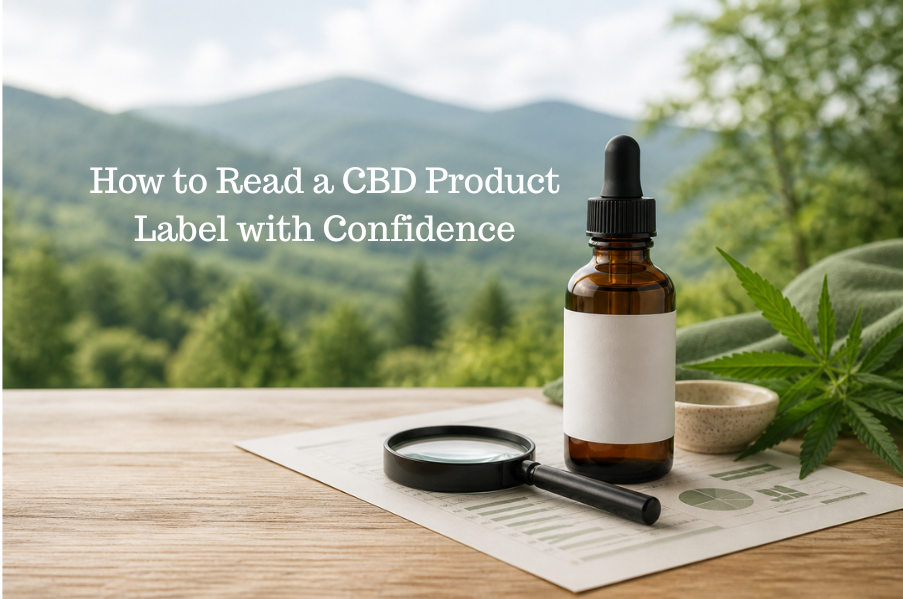
A certificate of analysis, often called a COA, reports laboratory findings for a tested sample. It can help you compare the product’s stated cannabinoid content with measured results. Some reports also include testing for contaminants.
Start with the company’s Analysis and COA page. Then compare the report with the package. Look for the product name, sample type, batch or lot information, testing date, and cannabinoid panel. A report for a different strength or product cannot fully answer questions about the item in your hand.
On the cannabinoid panel, find CBD, delta-9 THC, and any other reported cannabinoids. Check the units carefully. Results may appear as milligrams, percentages, or concentration by weight. “ND” commonly means the laboratory did not detect the compound above its stated limit. It does not mean the laboratory proved that no molecule exists.
Also check whether the report is current and readable. A transparent report should identify the laboratory and testing method. When available, contaminant panels may address pesticides, residual solvents, heavy metals, or microbes. Not every report includes every panel, so note what was and was not tested.
Read Directions, Warnings, and Storage Information
Good product selection continues beyond potency. Read the directions before purchase. Confirm whether the product is intended for oral or external use. Check serving instructions, application guidance, and any age-related warnings.
Storage instructions protect product quality. Heat, direct sunlight, moisture, and repeated contamination can affect a product. Follow the stated shelf-life and storage guidance. Do not use damaged packaging or a product with an unexpected smell, texture, or appearance.
Warnings also deserve attention. CBD can cause side effects and may interact with medications. Research has linked CBD use with concerns including drowsiness, digestive symptoms, liver injury, and drug interactions. [1] Contact a qualified healthcare professional when those concerns apply to you.
Compare the Package with the Online Product Page
The physical label should be your primary guide. Still, the current product page can provide helpful context. Compare the product name, strength, extract type, ingredients, count, and storage directions. Major differences deserve clarification before purchase or use.
Online descriptions can change faster than printed packaging. A company may update a formula, introduce a new size, or replace an older report. That does not automatically signal a problem. It does mean shoppers should confirm which version they are reviewing. Use the batch number, package details, and current COA together.
Also notice what the online page does not establish. Customer reviews describe personal experiences. They cannot prove that everyone will receive the same outcome. Marketing photographs may show size or texture, but they cannot confirm potency. Product awards and testimonials should never replace ingredient and laboratory information.
When details remain unclear, contact the company before ordering. Ask one focused question at a time. Confirm the product version, relevant laboratory report, or ingredient concern. A clear answer supports a better decision. Vague promises do not.
Watch for Common Label Red Flags
A single unclear detail does not always prove poor quality. Several missing details together should prompt more questions. Slow down when you notice the following:
- No clear CBD amount or serving information.
- No extract type or meaningful cannabinoid description.
- No batch information or accessible laboratory report.
- Claims that the product cures or treats serious diseases.
- Ingredients that differ between the package and product page.
- A report that belongs to another product or old batch.
The Federal Trade Commission requires health-related marketing claims to be truthful, not misleading, and supported by appropriate evidence. [3] Dramatic promises should create caution, not confidence. A responsible label explains the product without pretending to replace medical care.
Use a Simple Five-Step Label Check
You do not need to become a laboratory scientist. Use this short review whenever you compare products:
- Identify the product format and intended use.
- Compare total CBD with the amount per serving.
- Review extract type, THC wording, and all ingredients.
- Match the package with a relevant, current COA.
- Read directions, warnings, and storage requirements.
This process takes only a few minutes. It helps separate useful facts from attractive packaging. It also gives you better questions when contacting a manufacturer or healthcare professional.
Choose Clarity Before Claims
A confident CBD decision begins with clear information. Start with the product identity. Understand the amount in the container and each serving. Review the extract, ingredients, THC language, and warnings. Finally, connect the package with its laboratory report.
Green Mountain Hemp Company provides product information across its online catalog and available laboratory reports. Explore the CBD products category and compare those details with the supporting COAs before choosing. The right product should fit your preferences while giving you enough information to make an informed decision.
Labels cannot promise how every person will respond. They can show whether a company values clarity. Read carefully, ask questions, and Live the Way Nature Intended.
References
[3] Federal Trade Commission. Health Products Compliance Guidance.