Introduction
CBD safety for dogs starts with clear facts and a vet visit. Pet CBD items can differ in strength, contents, and test data. A nice label does not prove that an item fits your dog. Your dog’s age, health, and drug list may change the risks. This guide gives you key questions to ask before you choose.
Start With Your Dog’s Health
Begin with the dog, not the item on a shelf. Write down the change that led you to seek help. Note when it began and how often it occurs. Add any change in sleep, food, play, or movement.
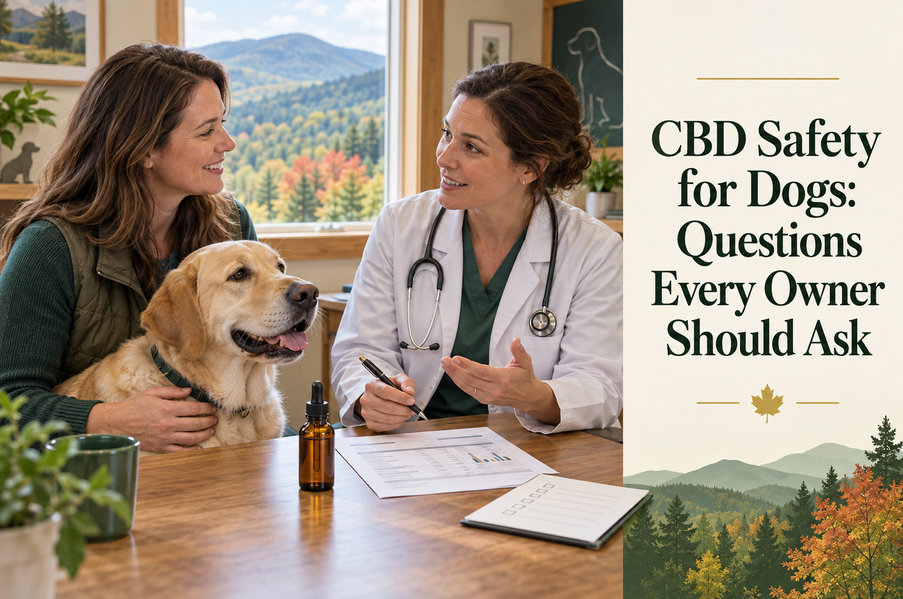
Share these notes with your vet. A health change may have many causes. Your vet may need an exam or tests first. That step can rule out a need for prompt care.
The U.S. Food and Drug Administration has not approved CBD for animals. It cannot ensure that pet CBD items are safe or work as claimed. The FDA tells pet owners to speak with a vet. This point should guide each choice that follows.
Ask Whether CBD Fits the Care Plan
Ask your vet whether CBD is worth discussing for your goal. Be clear about what you hope to track. Do not ask for a broad promise or quick cure.
Your vet can place the idea in your dog’s full care plan. They can weigh age, weight, past illness, and test results. They can also check if another form of care has stronger proof.
Bring a list of all drugs and health aids. Add flea care, vitamins, herbs, and nonprescription items. Give the name, strength, and usual time for each one. This list helps the vet spot a risk of drug effects.
CBD Safety for Dogs Begins With the Label
A front label is only a short sales view. Turn the pack around and read each panel. Look for the item name, net amount, contents, warnings, and company details. Check whether the label states CBD per serving or per pack.
Do not treat hemp oil and CBD as the same term. Hemp seed oil may contain little or no CBD. The label should state the CBD amount when CBD is a key part.
Read the full contents list. Some flavors or sweeteners can be unsafe for dogs. Never give a dog an item made for people without vet advice. Human foods may also contain chocolate or other harmful parts.
Check the Exact Product Form
Pet CBD comes in oils, chews, and skin products. Each form has its own label and use steps. Do not swap one form for another based on looks.
Green Mountain Hemp Company lists its Noah’s Ark Pet CBD formula in three bottle sizes. The page names high-CBD hemp oil and MCT coconut oil. Bring the exact page and pack to your vet.
The site also has a CBD products for dogs and cats page. Use it to compare forms and label facts. A shop page does not replace advice from your vet.
Ask About THC
CBD and THC are not the same compound. THC can cause harm in dogs. A pet may also reach cannabis made for adult human use. Edibles can add risks from chocolate, xylitol, or high fat.
Ask what the lab test says about THC. Do not rely only on a broad front-label claim. Match the lab file to the item and batch when you can.
If a dog eats cannabis or a large unknown amount, seek help. Tell the vet what the dog ate and when. Bring the pack or a clear photo with you.
Read the Lab Test Before You Buy
A certificate of analysis is often called a COA. A third-party lab makes this file after testing a sample. It can show the CBD and THC found in that sample.
Start with the item name and batch number. Check the test date and lab name. Then compare the CBD result with the label. A test for another batch may not describe the bottle you hold.
Use Green Mountain Hemp Company’s Analysis and COA library to find pet files. Save the file or print it for your vet. Ask which parts of the test matter most.
Look Beyond the CBD Number
CBD strength is only one part of a lab check. A fuller test may cover THC and unwanted matter. That may include heavy metals, crop sprays, germs, or solvents.
Not every COA covers the same test panels. A blank field does not prove that a lab checked it. Look for a clear result and the test method. Ask the company when the file leaves key facts out.
The lab name and contact details should be easy to find. The report should also name the sample. These facts make it easier to ask follow-up questions.
Check the Package Before Each Use
Read the pack again when you open a new bottle. Brands may change a label, size, or part list. Check the seal and use-by date. Do not use an item with a broken seal.
Look at the oil or chew before use. A new smell, color, or form may be a reason to stop. Call the company and your vet when you are not sure.
Keep the item in the place named on its label. Heat, light, and damp air may harm some goods. Close the pack after each use. Store it far from food and far from a dog’s reach.
Write the date you first open the pack. Keep the sales slip and batch code. These facts can help if you need to ask about a fault.
Ask About Drug Effects and Health Checks
CBD may affect how the body handles some drugs. Cornell notes that CBD can affect liver enzymes. Those enzymes help the body process many drugs. This is why the full drug list matters.
Do not stop or change a drug on your own. Do not add CBD to test a theory. Ask your vet how a new item could affect the care plan.
Your vet may want health checks before or during use. The need can depend on age, illness, and other drugs. Ask what the checks are for and when they are due.
Bring a Written Question List
A short list can keep the visit on track. You may want to ask:
- – Does my dog’s health history raise a risk?
- – Could CBD affect any drug my dog takes?
- – Does this label give enough clear facts?
- – Does the COA match this item and batch?
- – What signs should I watch for at home?
- – When should I call the clinic or seek urgent help?
Write down the answers in plain words. Ask the vet to repeat any point you do not grasp. Keep the notes with the label and lab file.
Know the Signs That Need Help
The FDA lists signs that may follow cannabis exposure in pets. They include marked sleepiness, low mood, heavy drool, vomiting, agitation, shaking, and seizures. Other signs may occur as well.
Call your vet, a pet hospital, or a poison center at once. Do not wait for a web search to give a diagnosis. Quick facts can help the care team act.
Share the type of item, the amount, and the time. Tell them your dog’s weight and current signs. If the amount is not known, say so.
Keep Human Cannabis Out of Reach
Store all cannabis items as you would store medicine. Use a closed high cabinet or locked space. Keep bags, coats, and guest items away from pets.
Do not leave used packs or food wrappers in open trash. Dogs may seek foods that smell sweet or rich. Check floors and low tables after guests leave.
Use the same care during walks and trips. Dogs may eat waste found on a path. Watch them near camp sites, parks, and public bins.
Track Facts After the Vet Visit
If your vet agrees on a plan, ask what to track. Use the same simple notes each day. Record food, sleep, mood, movement, and any odd signs.
Do not change many parts of the routine at once. That makes cause and effect hard to judge. Keep meals, walks, and other aids as steady as you can.
Write down the item name, batch, and date opened. Keep the label and COA with your notes. If the batch changes, save the new lab file too.
Report Changes Promptly
Ask your vet which changes need a call. Do not wait for the next planned visit if a concern appears. Stop guessing and seek advice.
When you call, give clear facts. State what changed, when it began, and how long it lasted. Share any change in drugs, food, or other aids.
You can also use the company’s frequently asked questions for general product facts. Still, health advice should come from your vet. A web page cannot assess your dog.
Use Claims With Care
Strong health claims should raise concern. A retail CBD item should not promise to cure a disease. It should not replace a diagnosis or proven care.
Look for facts you can check. These include a full label, a matching COA, and company contact details. Customer stories may explain interest, but they are not proof.
Research on CBD in dogs is still growing. Some studies focus on one item, dose, or health problem. Their results may not apply to every dog or product.
Make Safety the First Question
CBD safety for dogs depends on more than a product name. Start with your dog’s health and a vet talk. Then review the full label and matching lab test.
Ask about drugs, health checks, warning signs, and follow-up. Keep the pack and records close at hand. Store all cannabis items where pets cannot reach them.
Careful questions do not force one answer. They help you make a sound choice with your vet. Your dog’s health should lead every step.
Sources and References
- U.S. Food and Drug Administration. FDA Regulation of Cannabis and Cannabis-Derived Products, Including CBD.
- U.S. Food and Drug Administration. Use of Cannabis-Derived Products in Veterinary Medicine.
- Cornell University College of Veterinary Medicine. CBD: What You Need to Know About Its Uses and Efficacy.
- Cornell University College of Veterinary Medicine. Cannabis THC Intoxication in Dogs.
- Green Mountain Hemp Company. COAs and Lab Analysis.