Introduction
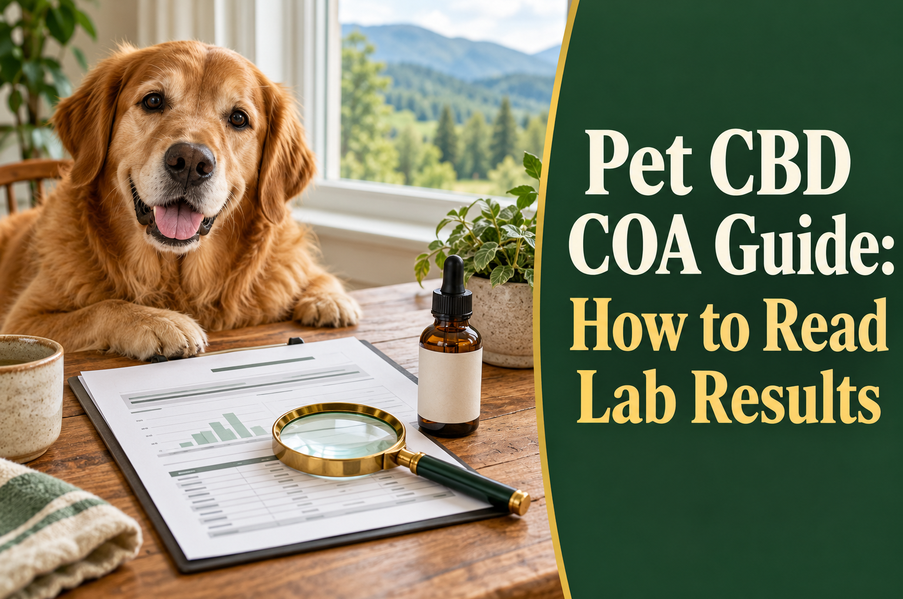
A pet CBD COA guide can help you read a lab report. A certificate of analysis, or COA, shows test results for one sample. It may list CBD, THC, and other tested compounds. Some reports also show checks for things such as pesticides or metals. A COA adds useful facts, but it does not prove a health result. It also does not replace advice from your veterinarian.
Start With the Product and Batch
Begin with the label on the product. Find the product name, size, and batch number. Some brands call this a lot number. Then open the report that matches that exact item. A report for another size or batch may not describe what you bought.
Check the sample name near the top of the COA. It should match the product as closely as possible. Next, look for the batch or lot code. Compare each letter and number. Small changes can point to a different run.
The date matters too. Note when the sample reached the lab. Then note when the lab ran the test. A new product should not rely on a report from a much older batch.
Check who ordered the test
The report should name the client or company. That name should make sense for the brand. A trade name and legal company name can differ. Still, the link should be clear.
Look for the lab name and contact details. Many reports also show a license or mark. You can search the lab site when the report seems unclear. A logo by itself does not prove that the file is real.
Use the QR code with care
Some labels include a QR code. Scan it with your phone. The code should open a report or a clear test library. Check the web address before you trust the page.
A QR code is only a path to data. It is not a test result. You still need to match the report to the product and batch.
Read the Pet CBD COA Guide in Order
Lab reports can look dense at first. Read one block at a time. Start with identity. Move next to potency. Then review THC and any safety panels.
Do not start with the largest number on the page. Units can change how a result should be read. A number shown as a percent is not the same as milligrams per unit.
Many reports use tables. The first column often names the compound. Other columns may show the result, unit, and test limit. Read the column heads before you read the values.
Know the common result terms
A result may say ND, which often means not detected. It does not always mean none exists. It may mean the amount was below the test limit.
LOQ often means limit of quantitation. This is the lowest amount the lab can state with set confidence. LOD often means limit of detection. Lab notes should define each short term.
A blank cell can mean many things. The test may not have been run. The result may be in another part of the report. Do not treat a blank as a pass.
Compare CBD Potency With the Label
Potency tells you how much of each tested cannabinoid was found. CBD may appear as CBD, CBDA, total CBD, or more than one row. The report may use percent, milligrams per gram, or milligrams per milliliter.
First, find the unit used on the product label. Then find the unit on the report. Do not compare two numbers until the units match.
A bottle label may list total CBD in the full bottle. The COA may show CBD in each gram or milliliter. You may need the bottle size to make a fair check. Ask the company or lab when the math is not clear.
Understand total CBD
Raw hemp can hold acidic forms such as CBDA. Heat and time can change part of CBDA into CBD. Some labs use a formula to show total CBD.
The formula should appear in the method or notes. Do not add numbers at random. Use the total shown by the lab when the method is clear.
A small gap between a label and a report may reflect test methods or batch change. A large gap deserves a question. Ask the seller which result applies to your bottle.
Do not use potency as a dose plan
A COA describes the sample. It does not tell you what amount is right for your pet. Species, size, age, health, and drug use can all matter.
The FDA has not approved CBD for use in animals. It tells pet owners to speak with a veterinarian about care choices. Share the label and report with your vet before use.
Check THC and Other Cannabinoids
THC is a key line for pet owners to review. Dogs and other pets can be harmed by cannabis exposure. A low number is not the same as a promise of no risk.
Find delta-9 THC and THCA on the report. Some labs may also show total THC. Read the units and test limits. Do not rely only on a front-label phrase.
The legal hemp limit does not prove that a product is safe for a pet. It also does not set a pet dose. Keep all hemp and cannabis products locked away. Call a vet or animal poison line after an unintended exposure.
Other cannabinoids may appear on the panel. Their presence does not prove a benefit. The COA only states what the lab found in that sample.
Review Safety Test Panels
A full COA may include more than potency. Safety panels can check for pesticides, heavy metals, solvents, microbes, or mold toxins. Not every report includes every panel.
Look for a clear result beside each tested item. Pass and fail marks should have a stated limit. The unit should appear in the table or method notes.
Pesticides and solvents
A pesticide panel may list many names. Check that each row has a result. ND may mean the amount was below the stated test limit.
A solvent panel may be more common for extracts made with solvents. The report should show what was tested. It should also show the limit used for each item.
Metals and microbes
Heavy metal panels may include lead, arsenic, cadmium, and mercury. Read the unit and pass limit. Do not assume a single pass covers all metals.
Microbe panels may list yeast, mold, or types of harmful bacteria. A report may also check mycotoxins. These are toxins made by some molds.
If a safety panel is missing, ask why. The answer may depend on the product and local rules. A missing panel is not the same as a failed panel. It is still a gap you can note.
Confirm the Lab Method and Signoff
Near the last page, look for the test method. Labs may name tools or standard methods. You do not need to be a chemist. You only need enough detail to see that a real method was used.
Check the sample dates and report date. Look for a lab signoff or approval mark. Some reports use a digital signoff. The lab may also state how long the results apply.
Watch for signs of a poor file. These include cut-off pages, changed fonts, missing dates, or a batch number added by hand. Ask for a clean copy when the file seems altered.
Use Green Mountain Hemp Company Reports
Green Mountain Hemp Company keeps an Analysis and COA library for listed products. The page includes reports for Noah’s Ark tinctures and dog chews. Match the report name with the item you plan to review.
You can compare items in the CBD for Dogs collection. The Noah’s Ark Pet CBD page lists bottle sizes and label facts. Use those details to check that you opened the right COA.
Do not use one report for each product in a bundle. Each form may have its own batch and test. A chew report cannot stand in for a tincture report.
Ask Clear Questions Before You Buy
A good question is short and specific. Ask which COA matches the item in stock. Ask what each unit means. Ask whether all pages are present.
You can also ask why a panel is not shown. A helpful seller should explain the report without making a cure claim. Save the answer with your order details.
Avoid reports that cannot be tied to a real product. Be wary of cropped files or images with no lab name. A brand should not ask you to ignore a large label gap.
Keep the Report With Your Pet Notes
Print the report if web links may change. Write the order date on the copy. A plain record helps you compare the next batch without guesswork.
Save the COA or web link after you buy. Write down the product and batch. Keep the label photo with the report.
Share both files with your vet. Include all drugs, food, and pet aids. This makes the talk more useful and clear.
Stop use and call your vet after an odd response. Seek urgent help for severe signs or an unintended cannabis exposure. Do not wait for a COA to answer an urgent health need.
A pet CBD COA guide is a tool for better questions. Match the batch first. Check units next. Read potency, THC, and each safety panel. Then place the report in context. A clear COA supports a careful choice, but your veterinarian remains the best guide for your pet.