Introduction
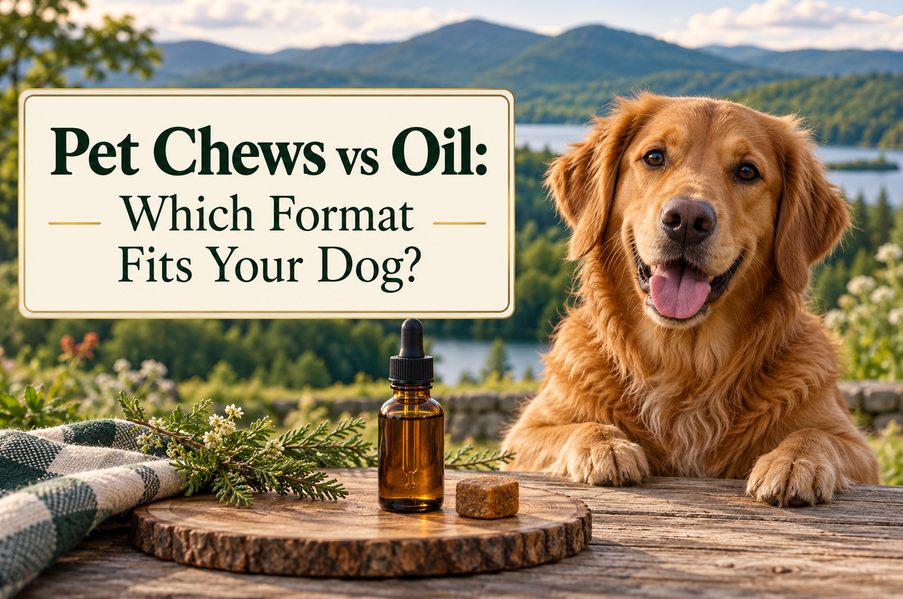
Pet chews vs oil can feel like a hard choice. Both forms may fit a safe pet care plan. Yet they differ in texture, contents, use, and daily handling. Your dog may also accept one form more easily. Start by reading each label and item page. Then discuss the choice with your vet. This guide checks useful details without making health promises.
Start With Your Dog, Not the Format
Every dog has a different plan and past health. Age, size, diet, and medicines can affect item choices. Food needs may matter as well. Your vet can check these details with you. That conversation should happen before you offer any CBD item.
The U.S. Food and Drug Administration has not approved cannabis for pets. The agency cannot confirm the safety or value of pet CBD items. It advises owners to discuss safe care with a vet. This point matters even when an item looks simple. A chew and an oil still need careful review.
Pet Chews vs Oil at a Glance
The main difference is how each item is presented. A chew comes as a ready-made piece. Oil usually comes in a bottle with a dropper. That difference changes how you read use facts. It also changes care, handling, and travel needs.
Chews may feel well-known because they resemble treats. Each piece should have a clearly stated amount. The label should also state the package count. Oils usually list bottle size and total CBD. They may also show an amount per measured use. Never estimate from the bottle’s look alone.
Neither form is always better for every dog. A clear label matters more than a popular form. So does sound batch testing. Check the whole item, not just its CBD total.
When Chews May Feel Simpler
Chews remove the need to handle a dropper. A ready-made piece can make a set plan easier. This may help owners who dislike measuring liquids. Chews can also be easy to carry in their package.
However, a chew usually has more contents than oil. Those contents make flavor, shape, and texture. Review every item on the list. Watch for contents your dog should avoid. Ask your vet about any new ingredient.
Do not assume every chew has the same amount. Read the amount per piece with care. Also check whether the label describes one piece or several. Keep the package away from children and pets. A flavored item may attract a curious pet.
When Oil May Fit the Plan
Oil has a different kind of simplicity. Some formulas have hemp extract and a base oil. The Noah’s Ark Pet CBD Health Formula lists high-CBD hemp oil and MCT coconut oil. Its page also lists several bottle strengths. That makes label choice most important.
A dropper can support measured use when steps are clear. Yet owners must read the markings correctly. The bottle strength and use size are separate facts. A larger number on the front does not explain each use.
Oil also needs safe handling. Close the bottle after each use. Follow its care steps. Keep the dropper clean. Never let the dropper touch your dog’s mouth or food. That step can help protect the item inside.
Check Every Item Label
A useful label answers basic questions without guesswork. It names the item and its form. It states the total amount and the CBD amount. It gives use steps and care advice. It should also show the ingredient list and brand details.
Start with the item name and package size. Then find the total CBD in the container. Next, locate the stated amount for one use or piece. These numbers should work together. If they do not, contact the brand before buying.
Check the full ingredient list next. An oil may use a carrier such as MCT oil. A chew may include flavor and texture ingredients. Neither list should be ignored. Ingredients are part of the item, not small print.
Look for a batch or lot number as well. That code should connect the package with its lab report. Also check the testing date when it appears. A report for another item or strength does not verify your package.
Use the COA Before You Choose
A lab report is often called a COA. An outside lab makes this report after testing a sample. The report can show measured hemp compounds. Some reports also cover pesticides, solvents, heavy metals, or microbes.
Open the brand’s COA library before making a choice. Green Mountain Hemp Company gives an Analysis and COA page for several items. Match the item name and strength first. Then match the batch number when known.
Compare measured CBD with the label. Check THC results and the lab’s reporting limits. Check what the lab tested. A cannabinoid panel does not always include every contaminant screen. The report should clearly name each test.
Cornell’s vet advice also stresses outside review. Product quality can vary across the market. That is another reason to inspect reports with care. A clear COA does not replace vet advice. It only adds useful item facts.
Think About Daily Handling
A good plan must work on normal days. Imagine breakfast, work, walks, and travel. Which form can you handle safely each time? Ease should never replace label steps. Still, useful fit can support a set plan.
Chews need a dry, safe care place. Follow the package instructions for heat and damp air. Count the pieces when you open a new package. This makes changes easier to notice. Never leave the package where a dog can reach it.
Oil bottles should remain tightly closed. Store them as the label directs. Keep the marked dropper with its own bottle. Droppers from other bottles may have different markings. Mixing them can make needless confusion.
For travel, keep either item in its own pack. The original label keeps key facts. It also keeps the contents list and brand details nearby. Avoid loose chews or plain travel bottles.
Consider Taste, Texture, and Contents
Dogs can be picky about taste and texture. Some accept a chew as part of their plan. Others may refuse a new smell or texture. Oil may blend into food when the label allows it. Some dogs may notice it anyway.
Do not hide a new item inside a large meal at once. You need to know whether your dog takes it. Follow the label and your vet’s advice. Watch your dog during any plan change.
Chews often need extra ingredients for shape and taste. Check those ingredients for known food needs. Oils may have a shorter list. Yet the base oil still matters. A short list is not always right for every dog.
Never use a human edible for a pet. Human items may have unsafe contents. Chocolate and xylitol are serious examples. Items may also have different THC levels. Choose only after reviewing the label with your vet.
Ask Your Vet Useful Questions
Bring the item label and COA to your appointment. That gives your vet clear facts to check. Share your dog’s medicines and supplements. Include nonprescription items as well. Mixes can matter even when an item seems mild.
Ask whether the ingredient list suits your dog. Ask what changes would need prompt care. Ask how you should record the item and plan. Clear questions lead to a more useful conversation.
Cornell notes that pet CBD items can vary in quality. It also notes known drug effects. Your vet knows your dog’s health context. Online item pages do not give that direct check.
If your dog becomes unwell, stop and seek advice. The FDA lists known bad signs after cannabis exposure. These include unusual sleepiness, drooling, vomiting, agitation, tremors, and convulsions. Call a vet or animal urgent care right away.
Check the Green Mountain Hemp Options
The CBD for Dogs collection shows the live pet range in one place. It includes chews, oil, a topical item, and a bundle. Use that page to check live stock. Then open each item page for details.
The Noah’s Ark Pet Chews are sold as ready-made pieces. The item page is the best place to check live contents, package details, and steps. Do not rely on an older screenshot or saved description.
The Noah’s Ark oil page lists several bottle strengths. It also lists its base oil. Check the selected strength with its matching COA. Avoid carrying details from one option to another.
Stock, price, packaging, and labels can change. Check the live page before sharing facts. If anything looks unclear, contact the brand and your vet.
Make a Safe Final Choice
Pet chews vs oil is mainly a useful choice. Chews offer ready-made pieces and well-known handling. Oil offers a measured liquid form and often fewer contents. Each choice has tradeoffs. Your dog’s needs remain the central concern.
Review four things before buying. Check the full label. Match the COA. Check the care and use steps. Ask about the item with your vet. These steps matter more than trends or reviews.
Keep hopes fair as well. A CBD item should not replace proven vet care. It should never delay a vet check for pain or illness. Treat marketing claims with care. Look for facts you can verify.
The better form is the one you can manage safely. It should have clear facts and matching test results. It must also fit your vet’s advice. Take your time, keep records, and check again when anything changes.
Sources and References
- U.S. Food and Drug Administration. FDA Regulation of Cannabis and Cannabis-Derived Products: Pets and Other Animals.
- Cornell University College of Veterinary Medicine. CBD: What You Need to Know About Its Uses and Efficacy.
- Green Mountain Hemp Company. CBD for Dogs Collection.
- Green Mountain Hemp Company. Noah’s Ark Pet CBD Health Formula.
- Green Mountain Hemp Company. Analysis and Certificates of Analysis.