Third-Party CBD Testing – Introduction
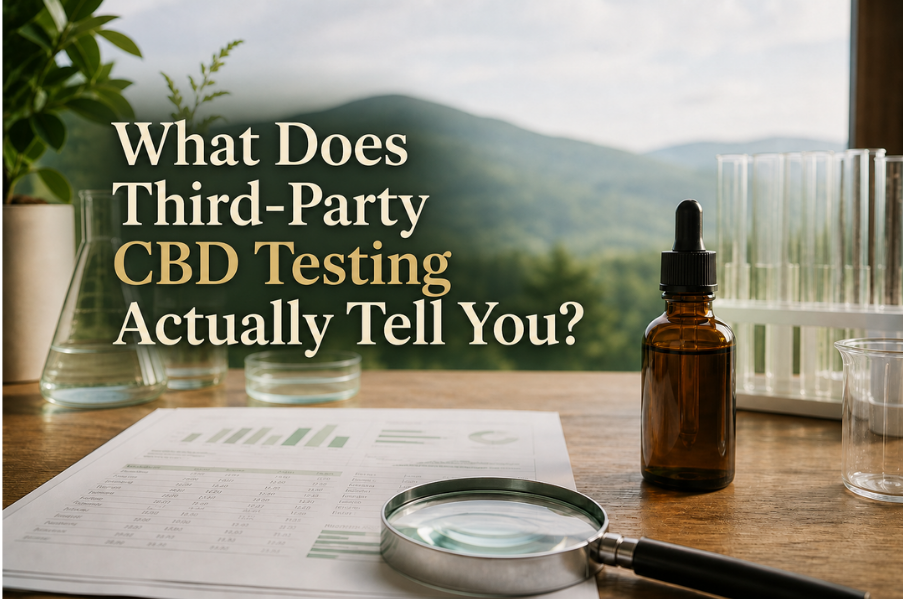
A CBD label can make a product sound simple. Yet the bottle only provides part of the story. A certificate of analysis, commonly called a COA, adds measured information from a tested sample. It may confirm cannabinoid levels and report selected contaminants. However, it cannot answer every question about quality, safety, or personal results.
Understanding that boundary helps shoppers make calmer, better comparisons. Third-party testing is most useful when the laboratory is independent, the report matches the product, and the requested panels fit the formula. This guide explains what a COA can reveal, what it cannot prove, and how to review one without needing a science degree.
What Third-Party Testing Means
A manufacturer sends a product sample to an outside laboratory. The laboratory uses validated methods to measure requested compounds or contaminants. It then records those findings in a report. “Third-party” generally means the laboratory is separate from the product manufacturer. Independence can reduce conflicts, but the report still deserves careful review.
A COA describes the submitted sample under specific test conditions. It does not automatically represent every bottle ever produced. Strong batch controls make the sample more meaningful. Weak sampling practices reduce that value. Therefore, the report should identify the product, batch or lot, test date, laboratory, methods, and measured results.
Testing scope also varies. One report may include cannabinoids only. Another may add pesticides, solvents, microbes, heavy metals, or mycotoxins. A clean cannabinoid page does not prove that every contaminant panel passed. Always confirm which panels appear and whether results belong to the same batch.
Accreditation can add useful context. It indicates that a laboratory has demonstrated competence for defined activities. Still, accreditation alone does not make every panel complete. Check the laboratory name, accreditation details, test methods, and report scope together. Clear documentation matters more than a badge displayed without explanation.
What Cannabinoid Results Can Show
The potency section usually lists CBD, delta-9 THC, and other cannabinoids. Results may appear as milligrams per unit, milligrams per gram, or percentages. Those units are not interchangeable without calculation. Compare the result with the label’s stated amount and serving format. A bottle total differs from a single-serving amount.
A tincture report might list cannabinoids per gram of oil. A soft gel may be compared by capsule. A chew may show a result per piece or product weight. The report should make the relationship understandable. If the label and COA use different units, contact the company before drawing conclusions.
The potency panel can also clarify extract language. Full-spectrum products may show several cannabinoids and measurable trace THC. Broad-spectrum products often retain multiple cannabinoids while reporting THC below a stated limit. Isolate-based products usually show a narrower profile. These patterns provide context, but category names are not standardized recipes.
Terms such as “ND” commonly mean not detected above the method’s reporting limit. They do not always mean absolute zero. The report may list limits of detection or quantitation. Those values explain the laboratory’s sensitivity. This distinction matters for shoppers concerned about drug screening, workplace rules, athletics, or personal THC avoidance.
What Contaminant Panels Can Show
Hemp can encounter contaminants during cultivation, extraction, processing, or storage. Relevant laboratory panels may examine pesticides, residual solvents, heavy metals, microbes, and mycotoxins. Each panel answers a different question. A pesticide test does not replace microbial testing. A solvent test does not confirm cannabinoid accuracy.
Results may show a measured value, a reporting limit, and a passing threshold. “Pass” means the reported value met the standard used on that report. It does not create a universal guarantee. Standards may differ by product type, jurisdiction, laboratory, or customer specification. The report should identify the limits applied.
Heavy-metal panels often include lead, arsenic, cadmium, and mercury. Microbial panels may address bacteria, yeast, mold, or specific pathogens. Residual-solvent panels evaluate chemicals connected with certain extraction or manufacturing steps. Pesticide lists can vary considerably. Review the actual compounds tested instead of relying on one broad “clean” claim.
How to Match a COA with Your Product
Green Mountain Hemp Company provides an Analysis and COA library for several product groups. Begin by locating the product name and matching lot or batch. Then compare the testing date with the product’s manufacturing timeline. A report for another strength, scent, or batch may not describe your container.
Next, verify the laboratory name and report identifier. Look for sample receipt and test completion dates. Confirm whether the sample type matches the finished product or only a raw ingredient. Finished-product testing usually provides more direct information about the item sold, though ingredient testing can still support manufacturing controls.
Check whether every page belongs together. Multi-page reports should carry consistent sample numbers. Review any amendments or reissued dates. If a QR code opens a general library, select the exact product carefully. When the match remains unclear, ask customer service for the current batch report.
What a COA Cannot Prove
A COA does not prove that a CBD product treats pain, anxiety, insomnia, or disease. Laboratory measurements describe composition. They are not clinical trials. The Federal Trade Commission expects health claims to have competent and reliable scientific support. A potency result cannot serve as evidence for a treatment promise.
Testing also cannot predict one person’s response. Body chemistry, medications, timing, format, and total exposure may change experiences. The FDA continues to note unanswered questions about CBD safety. It also warns about potential side effects and drug interactions. A passing laboratory report does not remove those concerns.
A report cannot guarantee every future batch. It cannot confirm storage after testing. Heat, light, moisture, and damaged packaging may affect a finished product. Nor can one sample rule out every possible contaminant. Testing is a useful quality signal, but it works best alongside responsible sourcing, manufacturing controls, accurate labels, and suitable storage.
Red Flags Worth Pausing Over
Pause when a company provides no report or only a cropped screenshot. Be cautious when product names, strengths, or batch numbers do not match. An old report without a clear connection to current inventory offers limited reassurance. Missing laboratory details, unclear units, or incomplete pages also deserve questions.
Watch for reports that display cannabinoids but omit every requested contaminant panel. That may be appropriate for some testing goals, yet the scope should be transparent. Claims such as “zero THC” need supporting detection limits. A colorful pass badge provides less information than the full measured result and method context.
Another warning appears when marketing promises exceed the report. A COA may confirm CBD quantity. It cannot confirm that the product cures conditions or replaces medical care. Quality-focused companies should present testing as evidence about the sample, not as proof of guaranteed health outcomes.
Use Testing with the Product Label
A COA becomes more useful beside the product label. Our guide on how to read a CBD product label explains serving details, ingredients, warnings, and cannabinoid amounts. Compare those details with the matching report. Differences may have reasonable explanations, but unexplained gaps deserve clarification.
Review the ingredient list separately. Laboratory potency does not identify every added oil, flavor, sweetener, fragrance, or allergen. Check the directions and warnings as well. A transparent report complements the label; it does not replace it. Both should help you understand the product before purchase or use.
Compare Products without Overreading the Data
The complete CBD product collection includes tinctures, capsules, chews, topicals, and bundles. Each format needs a relevant comparison. Milligrams per bottle help compare tinctures. Milligrams per unit may better explain capsules or chews. Topical formulas require attention to container size, ingredients, and external-use directions.
BALANCE Hemp Extract CBD Tincture illustrates why strength and serving details matter. A shopper should match the selected bottle strength with the corresponding report. The largest number on a product page should never be assumed to describe each dropper or serving.
REGENERATE THC-Free Broad-Spectrum Soft Gels offer a premeasured format. Here, the report can help clarify cannabinoid composition and THC reporting limits. Ingredients, capsule count, directions, and warnings remain separate parts of the decision.
A Practical COA Review Routine
Start with identity. Match the exact product, strength, and batch. Check the laboratory and dates. Review cannabinoid results, units, and reporting limits. Confirm every contaminant panel actually included. Note the standards used for pass or fail. Finally, compare the report with the label and current product page.
Write down questions before buying. Ask for clarification when units conflict or pages appear missing. Keep the package after purchase because it carries the batch number. Follow labeled storage instructions. If the product changes in appearance, odor, or condition, stop and contact the company rather than assuming an older COA answers the problem.
Discuss CBD with a healthcare professional when medications, pregnancy, breastfeeding, health conditions, or unwanted effects are involved. Keep cannabinoid products away from children and pets. Avoid promises of guaranteed results. Responsible testing supports informed choices, but it does not turn an unapproved retail CBD product into approved medical treatment.
Testing Builds Trust When Context Stays Clear
Third-party testing can confirm valuable facts about a submitted sample. It can describe cannabinoid content, THC findings, and selected contaminants. It can also reveal whether a company connects reports with specific products and batches. Those details make comparisons more grounded and less dependent on marketing language.
The best report is current, complete, legible, and easy to match. Its limits are equally important. A COA cannot promise personal results, prove medical effectiveness, or guarantee every container forever. Use it with the full label, transparent product information, responsible expectations, and qualified guidance. Live the Way Nature Intended.