Introduction
A senior dog comfort routine can make each day feel safer. Older dogs often need small changes, not a complete lifestyle overhaul. A soft bed, steady plan, and clear walking path may help. Set vet care also keeps the routine tied to real needs. Start with your dog’s current habits. Then adjust one part at a time.
Begin With a Vet Check
Age itself is not a diagnosis. Changes in motion, sleep, appetite, or acts deserve care. They may reflect pain, illness, stress, or one more concern. Your vet can check your dog and guide the next steps.
Senior dogs often benefit from more frequent wellness visits. The plan depends on age, breed, health, and past findings. Ask how often your dog should return. Bring a full list of foods, drugs, and pet aids. Include products bought without a prescription.
Do not assume each change is normal aging. New accidents, fear, weight loss, or heavy panting matter. So do sudden changes in thirst, appetite, or play. Contact your clinic when something feels different.
Track changes before the visit
Keep brief notes for one or two weeks. Record sleep, meals, walks, bathroom habits, and mood. A short phone video can also show motion at home. Dogs may move differently inside a clinic.
Use the same simple questions each day. Did your dog rise easily? Did stairs seem harder? Was the usual walk enjoyable? Did your dog finish each meal? Clear notes help your vet see patterns.
Review drugs and pet aids
Bring each label to the visit. Products can interact with drugs or affect testing. Never change a dose without vet advice. Never give a human pain drug to a dog. Some common human products can be dangerous for pets.
Build a Senior Dog Comfort Routine at Home
Home should support steady motion and easy rest. Walk through each room from your dog’s viewpoint. Look for slick floors, tall steps, tight turns, and blocked routes. Fix the most-used areas first.
Secure rugs can improve traction on smooth floors. Choose flat rugs with firm backing. Keep edges down to reduce trips. Place them between the bed, water, door, and favorite home space.
Gates can block unsafe stairs or pools. A stable ramp may help some dogs. It should have good grip and gentle slope. Ask your vet or rehab expert about safe use. Do not force a dog onto new equipment.
Create an easy rest area
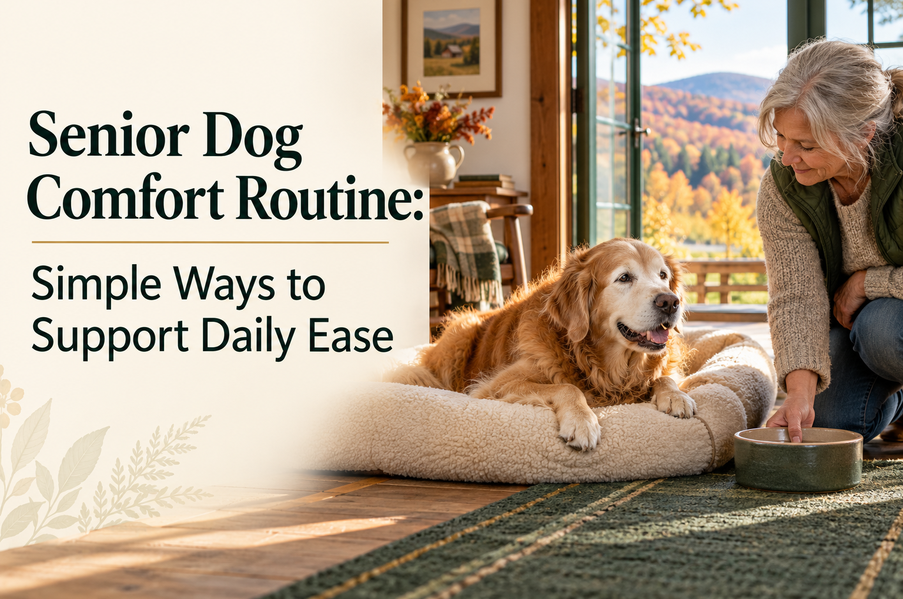
Choose a quiet place near home play. Older dogs may want company without constant noise. Use a supportive bed that is easy to enter. Washable covers make cleanup simpler.
Keep bedding clean and dry. Check the skin during grooming. Redness, swelling, sores, or hair loss need vet advice. Dogs with limited motion may need extra help changing position.
Watch room temperature throughout the day. Avoid cold drafts and strong direct heat. Some dogs also benefit from a soft night-light. It can make nighttime routes easier to follow.
Make daily routes safer
Keep furniture and bowls in known places. Sudden layout changes can confuse dogs with reduced sight. Clear cords, shoes, and small objects from walking paths. Use contrast at step edges when vision declines.
Support harnesses may help certain dogs move safely. Fit matters, so ask for expert advice. Never lift a dog by the collar. Avoid pulling legs or forcing sore joints.
Make Meals, Water, and Bathroom Trips Easier
Fresh water should remain easy to reach. Place bowls on a stable surface. Add one more water station if the home is large. Ask your vet before raising bowls. That choice does not suit each dog.
Keep meals consistent unless your vet asks for a change. Measure portions and track weight. Extra weight can increase the work of daily motion. Unplanned weight loss can also signal a problem.
Avoid sudden diet changes. They can upset digestion and hide good clues. If a new food is needed, ask how to transition. Report vomiting, diarrhea, poor appetite, or trouble swallowing.
Plan set bathroom breaks. Older dogs may need them more often. Keep the path short, bright, and clear. Use a leash when balance or vision is uncertain. Clean accidents calmly and avoid punishment.
Plan Gentle, Steady Motion
Many senior dogs still enjoy set play. The right amount varies widely. A short, steady walk may suit one dog. Some dogs may need several brief outings. Your vet can help set safe limits.
A steady plan often works better than rare, intense exercise. Keep the pace easy. Let your dog sniff and pause. Avoid slippery ground, sharp turns, and sudden sprints. Choose level routes when hills seem hard.
Watch effort, not distance
Your dog’s body language offers good clues. Shortened steps, lagging, trembling, or repeated stops matter. So do reluctance, heavy panting, and slow recovery. End the play early when your dog struggles.
Weather also changes the plan. Heat, ice, deep snow, and wet leaves add risk. Use shorter outings during hard conditions. Dry paws and coats after wet walks.
Check paws and nails
Long nails can change footing and posture. Ask your vet or groomer about a safe plan. Check paw pads for cuts, cracks, or trapped debris. Keep fur between pads tidy when advised.
Boots or toe grips may help some dogs. Introduce them slowly on a secure surface. Stop if they cause rubbing or distress. Proper fit and supervision remain important.
Support Calm, Known Days
Steady cues can lower fear. Keep meals, walks, and bedtime near known times. Use the same door for bathroom trips. Speak before touching a sleeping dog, especially when hearing declines.
Mental play should feel easy and positive. Try gentle sniffing games or simple food puzzles. Choose tasks your dog already understands. End before frustration begins. Rest is also a valid part of the day.
Keep social time flexible. Some older dogs enjoy visitors in small doses. Others need a quiet retreat. Let your dog choose distance. Never make a tired dog greet people or pets.
Comfort includes best-loved activities. A slow yard visit can bring real joy. So can brushing, sunlight, or sitting nearby. Notice which moments still make your dog engaged and relaxed.
Review Pet Products With Care
No product should replace vet health check. That rule matters for foods, pet aids, and hemp products. The FDA has not approved CBD for use in animals. It also advises owners to discuss treatment choices with vets.
If you are considering a hemp product, share the label first. Your vet needs the list of what is in it and serving facts. They also need to know each drug your dog takes. Do not begin based only on reviews or claims.
Green Mountain Hemp Company offers a CBD for dogs collection for product comparison. Its Noah’s Ark Pet CBD page lists current product details. These pages provide shopping facts, not vet advice.
Read the label and matching lab report
Check the product name, list of what is in it, amount, and warnings. Then compare its batch facts with the company’s COA and lab analysis library. A matching report should identify the tested batch. It should also show measured cannabinoids and available contaminant results.
Do not assume a natural label means risk-free. Avoid vague cure claims or guaranteed outcomes. Keep each product away from children and pets. Contact your vet promptly after any unexpected reaction.
Know When to Call the Vet
Routine notes are helpful, but some changes need faster care. Call your clinic for new pain, weakness, repeated falls, or collapse. Trouble breathing, seizures, severe vomiting, or a risk of poison may be emergencies.
Seek advice when your dog stops eating or drinking. Also report sudden fear, crying, hiding, or restless nights. Bathroom changes deserve care too. Early contact helps the team decide how quickly to check your dog.
Keep emergency numbers where everyone can find them. Include your set clinic and nearest emergency hospital. Add the ASPCA Animal Poison Control Center number if your vet asks for it. Preparation reduces delay during a stressful moment.
Use a Short Daily Check
Take one calm minute when your dog wakes. Watch the first few steps. Note a slip, limp, pause, or new sound. Check the bed, water bowl, and path to the door. Make sure each spot is clean and safe.
Do the same check near dusk. Think about food, play, rest, and bathroom trips. Ask if the day felt much like the last one. A small shift may be worth a note. A sharp change may need a call.
Keep the check kind and brief. Your dog does not need a test. The goal is to spot trends while life stays calm. Praise good effort and give time for rest. Share your notes with the vet when asked. This short habit can help the whole home act as one team.
Adjust the Routine Over Time
A good routine is never completely fixed. Review it each few weeks. Notice which changes help and which create stress. Ask home members what they observe. Update your notes before vet visits.
Change one item at a time when you can. That makes the result easier to judge. A new rug may improve one route. A moved bed may reduce walking. A shorter outing may protect energy for dinner.
Your dog’s needs can shift quickly. Stay curious and avoid blame. Slower motion is not stubbornness. Accidents are not bad acts. Calm support protects trust.
The best senior dog comfort routine is practical and personal. It combines vet advice with a safer home. It also protects rest, motion, food, and connection. Small choices can make each day easier to navigate. Most importantly, they help you notice when your dog needs more care.
Sources and References
- American Animal Hospital Association. Home Tips for Families of Senior Pets.
- American Animal Hospital Association. Pain Management and Home Modifications.
- American Veterinary Medical Association. Senior Pets Need More Attention.
- U.S. Food and Drug Administration. What to Know About Products Containing CBD.
- Green Mountain Hemp Company. COAs and Lab Analysis.